
Many thanks to everyone who sent me a photo of the 2026 Ride. A selection is published below.


Many thanks to everyone who sent me a photo of the 2026 Ride. A selection is published below.
Thank you for your photos. When sending them please include the name of the church and village or town. It was rather hectic at the Lavenham meet-up so if any mistakes have been made please email and let us know – mail@rachelsloane.co.uk – and we will correct as soon as possible.
SUFFOLK CHURCHES PEDAL AND DRIVE 2026 PHOTO GALLERY
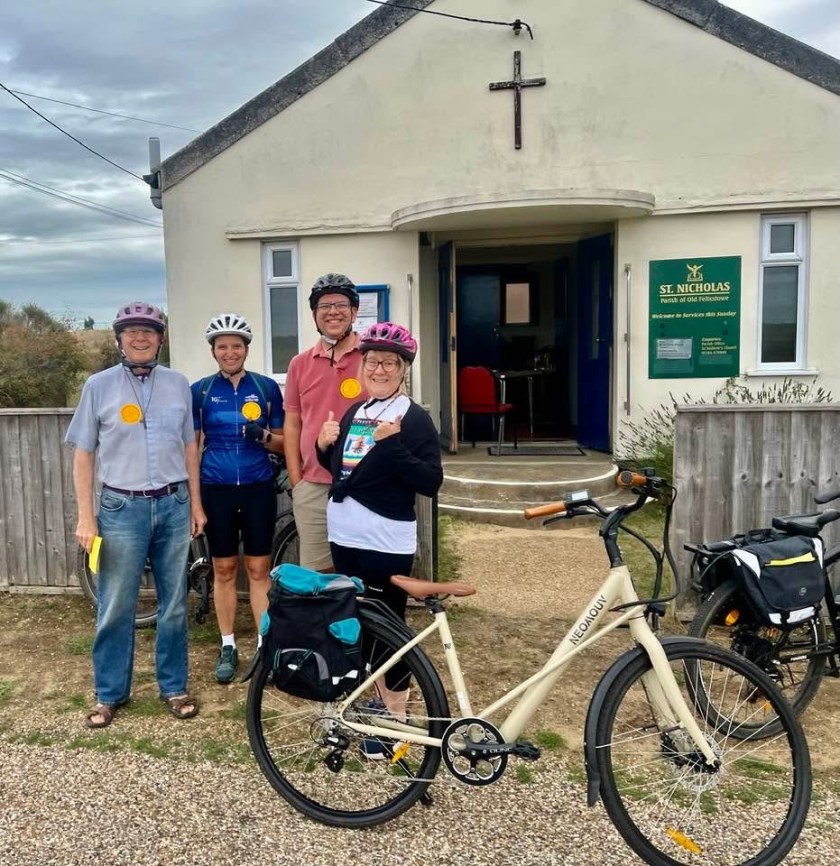
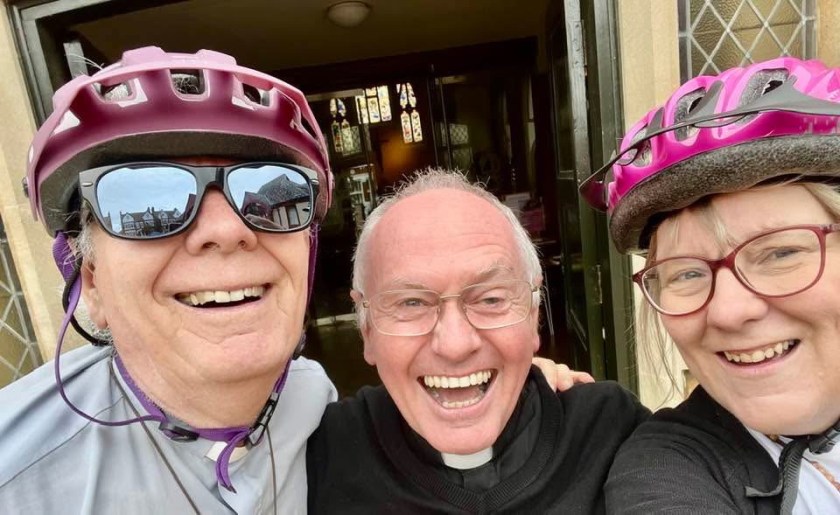
The first two are the winning photos from the Pedal and Drive photo competition:


LEAVING GT BEVILLS

PHOTOS TAKEN AT LANGHAM HALL… (Photos by Edward Mason)


PHOTOS TAKEN AT GROVE PARK (Photos taken by Jono Benson)


Thank you for your photos. Please include the name of the church, village or town. If any mistakes are made email mail@rachelsloane.co.uk and we will correct as soon as possible. It will take a few days to add them all so please be patient!
The PHOTO COMPETITION has been judged and below are the winning entry, runners-up and the photos that didn’t quote make it! We loved seeing them all…. and thank you for all you have done for the Trust. (The competition was for two photos – one of yourselves enjoying the event and one of a church or church feature….) Thank you to our independent judge, Jill Adam for all her help.
The winner is IAN HEAD, pictured with his friend Richard Bertram. “We cycled 45 miles. The photos show us standing outside St Mary of Pity at Burgate, and inside is the tomb of William de Burgate, and his wife Alianora with fine brasses.” Ian has raised £370 (and Richard about £500) with is ride, and he is supporting St Mary’s, Barking.
Ian has won a £50 book voucher and a certificate. Congratulations!


JOINT SECOND is LUKE di BENGA and JENNIFER NICHOLS. Congratulations!


PHOTO GALLERY OF SUFFOLK CHURCHES PHOTO COMPETITION entries 2026




MORE FROM THE DAY…….The 2026 Suffolk Churches Ride and Stride Photo Gallery


Another SHCT Certificate of Thanks for a Suffolk Ride and Stride volunteer. It was for Jean Goyder the retiring Area Organiser for Samford after over 30 years support. (She’s still a Local Organiser for St Mary, Capel St Mary.) Sara Eley of East Bergholt, the incoming AO, made the presentation. Congratulations!

SHCT Annual Service on Sunday September 6th at Blythburgh Church IP19 9LP

The SHCT is delighted to announce that its Annual Service of Choral Evensong is to be held at Holy Trinity Blythburgh at 6 pm on Sunday, September 6th.
All SHCT Friends are warmly invited.
Blythburgh,with its Angel Roof,is considered to be one of the great churches of England.
The guest Preacher will be Canon Rich Henderson ,Archdeacon of Suffolk who by repute will certainly do justice to this great occasion.
We will be lucky enough also to hear the Blythburgh Singers, a choir of Cathedral standard ,who sing at Holy Trinity every month.
And if that is not enough, the PCC of kindly invited us to a glass of wine afterwards!
The Collection will be shared between Holy Trinity and the SHCT
There is ample parking next to the church.
Please put in your diaries and do all you can to attend what should be a wonderful Service of celebration and Thanksgiving.
If you definitely can come, do please let us know so we can advise the PCC of numbers for refreshments!
In the meantime, every good wish from the Chairman and Trustees for a happy summer.
The Chairman of Ride and Stride, Simon Ronan, was pleased to present another Certificate of Appreciation to a long-term supporter of Ride and Stride.

Rosalind Field has been taking part in the annual fundraising event (previously known as ‘the Bike Ride’) for many years, and was nominated for her efforts by her long-term Area Organiser, Martin Favell.
At St Mary’s, Holton St Mary,. Suffolk, friends and villagers (including those at the community garden coffee morning, were there to join in the congratulations.
“I think I started taking part in the year 2000 and have probably raised about £20,000 for Suffolk Historic Churches Trust,” she explained. “I haven’t ridden a bike for some years now so I have been walking around churches. I have done Norwich, Ipswich, Bury St Edmunds and at least three times I’ve walked London churches. Often as I walked, people would willingly give me money too.”

Rather than just one church benefiting, Rosalind nominates different local churches for half the money she raises each year.
This September, Rosalind is planning to continue her fundraising by walking round the Cambridge colleges for Suffolk Churches Ride and Stride. (Saturday 12th September)


14 July 2026
Cyclists, walkers, vintage and classic car owners and even horse-riders, can start to plan their route for Suffolk Churches Ride and Stride and Pedal and Drive day, which will be held on Saturday 12th September. Details of how to get involved are now in churches and on the Suffolk Historic Churches Trust website.
Charlie Haylock, Suffolk author and specialist in Spoken English, helped to launch this year’s event at St Mary the Virgin, Edwardstone, Sudbury.
“This church is where I was christened and for the first five years of my life I lived in Edwardstone,” he explained. “Our churches go back hundreds and hundreds of years so are important from an architectural point of view but they are still the centre of the community, especially in villages. People get married in them, and buried, and now, luckily, churches are used to hold functions that bring people together.”

Also present at the launch was a 1934 Rolls Royce. owned Jo Burge, a Penny Farthing bicycle owned by Nick Tribe, as well as cyclists and walkers who will be involved in the main fundraising event for Suffolk Historic Churches Trust.
At Suffolk Churches Ride and Stride and Pedal and Drive walkers, cyclists, runners and vintage or classic car owners will be sponsored on their journey around the historic churches taking part – over 500 in Suffolk alone. Organised by Suffolk Historic Churches Trust, this fund-raising idea started in Suffolk in 1982 and is now held across most counties in England.
“Last year, the day’s fundraising in Suffolk raised £220,000, and we hope to equal or even better that this year” explained Simon Ronan, the Chairman of Suffolk Churches Ride and Stride. “Everyone can get involved as they chose their route, visiting as many or as few churches as they wish. Individuals, families and groups of friends, who are cycling, driving, walking or running, will meet others taking part and be welcomed by volunteers at many of the churches. Even those sitting as welcomers in churches can be sponsored too! We are very grateful to Charlie Haylock, the team at St Mary’s, Edwardstone, Nick Tribe and Jo Burge, for their help in launching this year’s event.”

On Ride and Stride Day, (Saturday 12th September), the cyclists, and walkers get sponsors for their journey around some of Suffolk’s wonderful churches, and half the money goes to their choice of church, chapel or meeting house and the remainer is given in grants by Suffolk Historic Churches Trust for urgent repairs or improvements to church buildings. The latest grants quarterly meeting awarded £71,000 to twelve Suffolk churches (details attached) but all are welcome to apply.
Also, on the same day, Suffolk Churches Pedal & Drive, a vintage and classic car rally is held, with around 100 cars visiting a selection of churches solving clues in a mystery quiz. A steeple-to -steeple horse ride is organised too. Full details of all the events are on the Trust website. Donations and sponsorship can also be collected via Just Giving. Click HERE (cars) or HERE (horses)
A list of churches that are open is available on this Trust website, and from participating Suffolk churches. Cyclists and walkers can choose whichever churches they wish, and runners and disability scooters are welcome too. A photography competition for participants will also be held on the day, and details are on the Trust website. Click HERE


RULES AND HOW TO ENTER:
Ride and Stride Day – Saturday 12th September 2026
Entry is free and open to all ages, but we ask that you are sponsored or get donations for your journey. (We give grants to help preserve our beautiful church buildings.) There is a Sponsorship form on this website or you can fundraise via JustGiving. CLICK HERE for details of the event.
The prize is a £50 voucher, for the best SET of TWO photos. They should be taken on Ride and Stride Day and will be of:
The submitted photos may be used for publicity for the Trust, encouraging others to support our work, and the photographer will be credited when any are used, but no fee is paid.
Please take your photos on Ride and Stride Day, then email (by the closing date 18.9.2026 ) to shct@btconnect.com
When sending us your set of photos we need to know where each one was taken, and also:
Your name email: Phone number
Your address ……………and which church are you raising funds for.
An independent judge will choose the winners. Good luck!
Winners are announced on our website and named in Ride and Stride publicity.

The total sum awarded at the June Grants Meeting of Suffolk Historic Churches Trust was £71,000. It is shared between twelve Suffolk churches, eight in the west of the county and four in the east, all facing huge bills for repairs and conservation.
The successful parish churches are in Barningham, Brome, East Bergholt, Hunston, Ipswich, Keddington, Kettlebaston, Rattlesdon, Stoke by Nayland, Walsham le Willows, Whitton and Wissington.
The various work that will be undertaken in the churches include work to floors and guttering, improving heating, and access. (Details listed below)

The total cost of the work at the thirteen churches (excl VAT) is around £1,890,000. In East Bergholt, St Mary’s needs to re-roof and lead the roof, remove benches, underfloor heating, and level access to South porch and the work will cost around £1,433,800. At SS Mary & Botolph, in Whitton, the vestry underpinning, new roof and drains will cost £111,145. The grants awarded by SHCT will go towards the costs.

“Several churches in the diocese, not including those above, currently find they must raise in excess of two million pounds in order to carry out major work to the fabric of the building. Suffolk Historic Churches Trust can seldom meet the entire needs of a church and sees itself as an enabler for other grant givers,” explained John Devaux, Chairman of the Grants Committee, SHCT. “Churches, chapels and meeting houses of all denominations can apply for a grant from the Trust, which are awarded quarterly.”
The SHCT grant money is raised by legacies and the annual Suffolk Churches Ride and Stride Day, the Suffolk Churches vintage and classic car rally Pedal & Drive, as well as a Steeple to Steeple horse ride, all held on the same day. This year the fundraising day will be held on Saturday 12th September and details are on this website.
There are more details of how to make a grant application click HERE
Suffolk Historic Churches Trust Grants awarded in July 2026 were:
St Andrew, Barningham – metal grilles to four windows (Hooligans have thrown stones and a brick though a stained glass window on two occasions. There are grilles over some windows but there is a need to protect the remaining four.).
St Mary, Brome – Replace gutters, downpipes etc. Connect to mains drainage
St Mary, East Bergholt – Re-roof and lead the roof, remove benches, underfloor heating, level access South porch
St Michael, Hunston – Install pew heaters in chancel
St John, Ipswich – Install upgraded power supply. Change heating to infra-red heaters
SS Peter & Paul, Keddington – Conservation of sanctuary floor
St Mary, Kettlebaston – Re-tile south nave roof. Various flint and plaster repairs
St Nicholas, Rattlesdon – Replace Chancel woodblock floor
St Mary, Stoke by Nayland – Repair bell chamber louvres.
St Mary, Walsham le Willows – Masonry repairs to south aisle, eastern window
SS Mary & Botolph, Whitton – Vestry underpinning, new roof and drains
St Mary, Wissington – Lay an equal access ramp to the porch


At the recent annual meeting for Area Organisers of Suffolk Churches Ride and Stride, a Long Service Certificate of Appreciation was awarded to Nigel Smart for his work in the Bosmere area, by the chairman of the event Simon Ronan. (Area Organisers can nominate one volunteer for Long or Outstanding Service each year).
The evening is when the boxes of sponsor forms, posters etc are collected by the Area Organisers and taken back for delivery to the churches in their area. The boxes are collated by the Trust Hon. Secretary Jill Taylor – a huge job.


Also at the meeting Simon can brief those assembled with any Ride and Stride news and the total raised by the event the previous year.
They were asked to remind churches that the volunteers sitting to welcome cyclists and walkers can be sponsored for their time ( using the usual sponsor form) and that Simon is asking every church to identify a “fascinating fact’ for participants to hear. This might be something from the churches history or something that can be seen during their visit.
The Area Organisers were also interested to hear how the Suffolk Churches Vintage and Classic Car Rally and the Steeple to Steeple Horse Ride (both held on the same day) are organised.
This year’s event will be held on Saturday 12th September. More details are on this website and in Suffolk churches.